Secomax™ CBN010, the universal uncoated cost saver
23:37

Secomax™ CBN010 is a low cBN content grade with an average grain size of 1.5 µm and titanium carbide (TIC) binder. Newly developed manufacturing methods employed for CBN010 provides an extremely uniform microstructure, with fine cBN grains evenly distributed throughout the ceramic binder, providing improved material properties and optimum wear resistance in application.

Increased chip resistance allows for the production of high quality cutting edges, which are essential for high precision machining with excellent surface finish as required in industry today.

Secomax™ CBN010 is recommended in many different materials and applications. It is mainly intended for finishing operations and is available in four different insert formats: Solid, full face, tipped and multi-tipped formats, all including a number of wiper options. CBN010 is also available in a number of MDT inserts. Almost everything is possible: grooving, copying, turning, plunging, face and internal machining.

Secomax™ CBN010 is the true universal uncoated cost saver.


For more information, please contact your local Seco representative, or our Advanced material (PCBN/PCD/CERAMIC) team.


Author:
Per Ola Jönander
Product Specialist SECOMAX PCBN/PCD/CERAMIC
SECO TOOLS AB
737 82 Fagersta, Sweden
Office +4622340818
Mobile +46703163555 email:perola.jonander@secotools.com
0 kommentarer

Secomax™ MDT, a combination that is hard to beat
04:04

The common PCBN inserts in shapes according to ISO standards are not always suitable for machining grooves and the shape of the components severely limits their use. In order to machine all surfaces, groove-turning inserts are needed.

Designed to accommodate narrow cutting edge widths in grooving and parting-off operations, Seco’s MDT (Multi-Directional Turning) system has traditionally consisted of single-sided PCBN inserts, as well as mono and modular tool holders for radial internal, external and axial machining. This range is continuously growing.

At the same time, stability and accuracy in positioning are required. The patented Secoloc™ serrations between the holder and insert make SECO MDT the most rigid groove-turning system on the market.

Almost everything is possible: grooving, copying, turning, plunging, face and internal machining. With SECO MDT and Secomax™ PCBN you can machine hardened grooves and surfaces that are usually difficult to reach.

The edge quality and selected Secomax™ PCBN grades guarantee excellent surface finish and long tool life. The stability and positioning accuracy of SECO MDT allows machining to close tolerances with high cutting data. Secomax™ MDT inserts are available in the grades CBN010, CBN170 and CBN200.


For more information, please contact your local Seco representative, or our Advanced material (PCBN/PCD/CERAMIC) team.


Author:
Per Ola Jönander
Product Specialist SECOMAX PCBN/PCD/CERAMIC
SECO TOOLS AB
737 82 Fagersta, Sweden
Office +4622340818
Mobile +46703163555 email:perola.jonander@secotools.com
0 kommentarer

The influence from hardness of tool life in finish hard turning
00:18

If I don’t get the same tool life every time I run a CBN insert, what can the reason be? Everything is the same; the component, the machine, the insert!

Have you ever asked yourself this question? If so, you are not alone.

Let’s analyse the machining process in more detail. The term “process factors” is used to describe the input to the machining operation (ie all that is needed to be able to generate chips), and includes insert, machine, material etc, see figure.

Many automotive components are case hardened, and on the drawings, the required hardness after case hardening is usually specified to 60 ± 2 HRC. So, if the components are 58 HRC or 62 HRC, will this influence tool life?

To study this, 5 different materials were produced, one reference material and five different variants. After quenching, the reference material was tempered at 160 degrees C. By tempering the material at other temperatures, the hardness is changed.


For each of the workpiece materials, machining was done at the following data:

 - Insert
  • CNGA120408S-01525-L1-B, CBN060K 
- Cutting data
  • Cutting speed 200 m/min 
  • Feed rate 0.15 mm/rev 
  • Depth of cut 0.10 mm 
- Tool life criterion
  • Breakage 

Tool life in the reference material (60.5 HRC) was set to 100%. When increasing the hardness to 62 HRC tool life is decreased slightly, while when decreasing the hardness, tool life increases.

 As can be seen in the graph, tool life is relatively stable in the 58 – 62 HRC range, but changing the hardness from 62 to 58 HRC, will increase the tool life. A further decrease in the workpiece material hardness increases the tool life even more.

So, to answer the question, tool life of an insert depends on the cumulative effect of all the “process factors”. If any of these factors change, like to hardness of the workpiece material (even though it is still within the approved range) there can be a change in tool life. In the test above, tool life is changed by 20%, but the actual value will always depend on the specific application.

For more information, please contact your local Seco representative, or our Advanced material (PCBN/PCD/CERAMIC) team.

Author:
Henrik Sandqvist
Product Specialist SECOMAX PCBN/PCD/CERAMIC
SECO TOOLS Shanghai CO., Ltd. Level 2, Building 8, 456 HongCao Rd., Shanghai 200233, China
Office: +86 21 5426 5849
Mobile: +86 185 1520 6942
e-mail: henrik.sandqvist@secotools.com
0 kommentarer

PCBN Technical Guide
02:17

The Seco Tools Navigator set include product catalogues for:
  • Turning
  • Milling
  • Holemaking
  • Threading
  • Solid End Mills
  • Tooling
  • Seco Capto 
These catalogues give you information about the current product range as well as dimensions on all products, available spare parts etc. The catalogues also give you general cutting data recommendations.

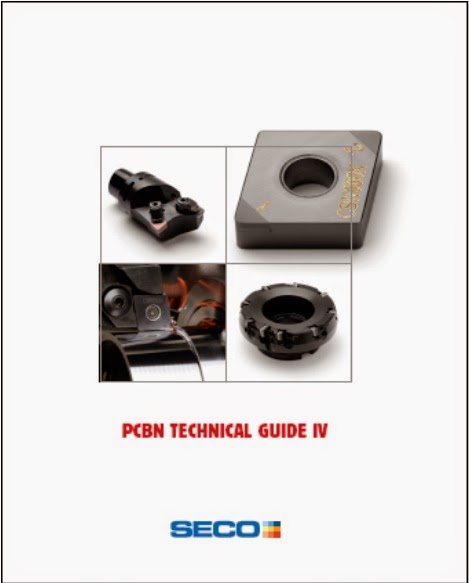
For successful implementation and usage of PCBN, more technical competence is usually needed. To support our PCBN customers, we have for many years also produced a “PCBN Technical Guide”.

http://www.secotools.com/CorpWeb/Products/Advanced_cutting_materials/PCBN_guide_IV.pdf

It is not a catalogue where you can find products, but rather a guide on how to successfully use PCBN. It is divided in two main parts. The first part is a general technical guide, including:
  • Information about PCBN grades
  • Where PCBN can be used
  • Machining methods
  • Insert technologies
  • Tooling technologies
  • Etc.
In the first part, the different material groups where PCBN can be used are described shortly. The second part is divided into material chapters. In each of the chapters, a more in-depth presentation is made of each workpiece material, including also machining recommendations such as:
  • Grade selection
  • Cutting data recommendations
  • Edge preparation 
 Included in each workpiece material chapter is also a number of application examples, showing successful implementations of PCBN.

 The grade selection is based on the operation (roughing or finishing), the machining method (turning, milling etc), and if it is continuous or interrupted, see table below.


The cutting data recommendations are also based on the operation, the machining method, and are shown as a working window with cutting speed and feed rate.


Below is an application example of machining crushing cones.


 The first Technical Guide was small when it was released in 2003, but our knowledge and experience has increased since then, and the current version, IV, released 2010, contains over 200 pages of useful information for anybody using PCBN.


Click here to download your copy of PCBN Technical Guide.


For more information, please contact your local Seco representative, or our Advanced material (PCBN/PCD/CERAMIC) team.

Author:
Henrik Sandqvist
Product Specialist SECOMAX PCBN/PCD/CERAMIC
SECO TOOLS Shanghai CO., Ltd. Level 2, Building 8, 456 HongCao Rd., Shanghai 200233, China
Office: +86 21 5426 5849
Mobile: +86 185 1520 6942
e-mail: henrik.sandqvist@secotools.com

1 kommentarer

Hard turning with wiper inserts
22:45

The most common tool life criterion in finish hard turning is surface roughness. Traditionally the Ra-value is used, and a typical Ra value for gearbox components such as gears and shafts is 0.8 mm.

Surface roughness in a turning operation depends on a variety of factors. Feed rate and the size of the corner radius are considered to be the most influential of these. When the feed rate is increased the surface roughness increases rapidly. Selecting a larger nose radius will decrease surface roughness.

In finish hard turning it is vital to reach the required surface roughness tolerances, since it is the final operation before assembly. A feed rate of 0.1 mm/rev is common in hard turning operations where wiper inserts are not used. According to the diagram below, it is possible to run at 2 to 3 times higher feed rates with wiper inserts, and still maintain the required surface roughness.


Why focusing on feed rates? Well, the only way to improve productivity is to increase cutting data, and there are three possibilities:
  • Increase cutting speed
  • Increase feed rate
  • Increase depth of cut
In finish hard turning it is usually not possible to increase depth of cut, only 1 cut is needed. Increasing cutting speed will improve productivity (increasing the cutting speed from 160 to 180 m/min would give a 12% increase in productivity), but increasing the cutting speed will usually also decrease tool life.

Therefore, the most common way to increase productivity and improve surface quality in finish hard turning is to use wiper inserts. The productivity can be increased significantly (increasing the feed rate from 0.1 to 0.2 mm/rev will give a 100% increase in productivity). This increase in feed rate will not affect tool life significantly, and the result is that more components can be machined in a shorter time while maintaining a good tool life.

Wiper geometries are available in different formats, in the first example below, a tipped wiper insert was used, and in the second example, a solid PCBN insert with wiper was used.


For more information, please contact your local Seco representative, or our Advanced material (PCBN/PCD/CERAMIC) team.

Author:
Henrik Sandqvist
Product Specialist SECOMAX PCBN/PCD/CERAMIC
SECO TOOLS Shanghai CO., Ltd. Level 2, Building 8, 456 HongCao Rd., Shanghai 200233, China
Office: +86 21 5426 5849
Mobile: +86 186 167 90063
e-mail: henrik.sandqvist@secotools.com
2 kommentarer

Rough Turning of Grey Cast Iron Brake Components
02:08

Most brake drums and brake discs are today made of grey cast iron. This material has been successfully machined with Seco Tools’ PCBN inserts for many years, and we have today a thorough understanding of the requirements. Vital to the success is the properties of the work piece material, and there are three parameters that need to be checked before any machining test with CBN. For these parameters, we recommend the following;

  • Free ferrite content    <   5%
  • Ageing time               > 10 days
  • Sulphur content         =   0.1 %

If these recommendations are followed, CBN is by far the most cost effective tooling material available in the market for machining brake discs and brake drums. Cutting speeds are much higher than with any other insert material. CBN also has the wear resistance to withstand the abrasiveness of the grey cast iron.

CBN300 is Seco Tools’ recommended grade for roughing of grey cast iron. It is available in solid format, with our without cylindrical center hole, to fit any type of tool holder. Typical components where CBN300 is used are brake discs and brake drums.


With CBN300, it is possible to run at cutting speeds of 1,000 m/min or more, and reach tool lives of several thousand components (depending on operation and component size) per cutting edge. As shown in the examples below, the tool lives with CBN300 is 10 to 30 times that of ceramic inserts.


But, CBN300 is also a problem solver, and can cope with loads not possible to withstand with any other cutting tool material.

Casting of brake drums and brake discs usually result in a product that has some ovality and/or warping. Therefore, machining of brake discs and brake drum starts with a roughing cut to make the components round and/or flat, and also to remove any surface impurities.

On larger components, like brake drums for pick-up trucks, ovality can be as much as 5 mm. This means the insert on each revolution will “feel” almost zero load on one side of the component, and on the other side a very heavy load, where the depth of cut can be up to 5 mm. This requires an insert with an extreme wear resistance as well as superior toughness.

Due to its relatively high toughness, carbides can be used on these components, but tool life is short, and productivity is low. Ceramic inserts does not have the toughness needed, and will commonly break when the load variation is too high. That leaves CBN as the optimal solution. CBN can machine very cost efficiently components with “normal” ovality, but CBN can also cope with the components with higher degree of ovality and/or warping. The production can go on un-interrupted.

The option would be to sort out the “worst” components, and machine them separately, or send them out to a sub-supplier, and this will add cost.

In the example below, carbide inserts were used, but tool life was low. Ceramics was tried, but they could not withstand the large variation in depth of cut. CBN300 was the solution. Tool life is 20 times longer than with ceramics, and it was also possible to reach this tool life consistently.


After roughing, a finishing cut is made to reach the required dimensions, tolerances and surface finish criteria. Additional operations may include grinding to generate a certain surface appearance.

The finishing cut is preferably done with Seco Tools grade CBN400C, a grade developed for superior performance and productivity in finishing of grey cast iron components, which will be presented in a coming article.

For more information, please contact your local Seco representative, or our Advanced material (PCBN/PCD/CERAMIC) team.

Author:
Henrik Sandqvist
Product Specialist SECOMAX PCBN/PCD/CERAMIC
SECO TOOLS Shanghai CO., Ltd. Level 2, Building 8, 456 HongCao Rd., Shanghai 200233, China
Office: +86 21 5426 5849
Mobile: +86 186 167 90063
e-mail: henrik.sandqvist@secotools.com
1 kommentarer

Secomax™ Octo05, CBN200 – A productivity booster in Grey Cast Iron milling.
08:18

Try out our new PCBN insert for cost effective milling of e.g. Grey Cast Iron components, those inserts can be used in combination with Carbide inserts or the cutter fully equipped with PCBN inserts, all depending on your specific demands.

Octo05, PCBN are available without wiper with 8 usable corners and as wiper with 4 effective cutting edges, the format is full face.

The images below describe the difference in axial and radial direction between a PCBN wiper and non wiper insert (top image) and a PCBN wiper insert and a non wiper Carbide insert (bottom image), as shown the PCBN wiper insert will generate the surface finish and the non wiper inserts will do most of the job in the radial (feed) direction.


The well known Secomax™ CBN200 with 85 % cBN content, 2 micron grain size and a metallic binder, Co-W-Al Ceramic, comes together in a product which offers great toughness and high wear resistance machining soft abrasive and hard materials.

Application example: Machine bed


With Secomax™ Octo05 SECO now offers an extensive range of PCBN milling solutions for various demands and machining conditions.

For more information, please contact your local Seco representative, or our Advanced material (PCBN/PCD/CERAMIC) team.

Product Manager:
Anders Wickman
Product Manager SECOMAX PCBN/PCD/CERAMIC
SECO TOOLS AB
737 82 Fagersta, Sweden
Office +4622340254
Mobile +46703431200
e-mail:anders.wickman@secotools.com

0 kommentarer